Technology changes that BS VI demand
The OEMs cannot just add some additional components in the
manufactured vehicles to reduce the emissions. If Euro VI compliant DPF
needs to be fitted in a small diesel car made in India, the bonnet size
will have to increase by exceeding the 4 meters mark. In case of
natively developed OEMs like Mahindra and TATA, the new standards will
have to be implemented in their line of vehicles with utmost perfection.
Since this technology has to be multiplied over hundreds of platforms,
the challenge seems to be higher. In order to control the PM and NOx
emissions, the OEMs will need to implement various kinds of technologies
like fitting Diesel particulate filter (DPF) in the vehicles to expel
particulate matters from the gas exhausted. For reducing the NOx
emission, selective catalytic reduction (SCR) and exhaust gas recirculation (EGR) need to be used.
India has taken the responsibility to cut down its carbon footprint by
35-55% within the next 12 years from what was recorded in 2005. These
carbon footprint obligations have forced the country to move directly to
BS VI norms bypassing the BS V norms. The BS VI norms will see the NOx
emissions come down by 25% approximately in case of petrol engines and
68% in case of diesel engines. The PM emissions for diesel engines will
come down by 80%.
Difference between BSIV & BSVI Engine: BS4, BS6 Performance
To regulate the pollution emitted by cars and two-wheelers, the government of India has put forth regulations known as Bharat Stage Emission Standards (BSES). The Central government has mandated that all vehicle manufacturers, both two-wheelers and four-wheelers, should manufacture, sell and register only BS6 (BSVI) vehicles from 1 April 2020.In this article, you will learn about BS4 vs BS6 engine,Difference between BSIV & BSVI Engine: BS4, BS6 Performance
To regulate the pollution emitted by cars and two-wheelers, the government of India has put forth regulations known as Bharat Stage Emission Standards (BSES). The Central government has mandated that all vehicle manufacturers, both two-wheelers and four-wheelers, should manufacture, sell and register only BS6 (BSVI) vehicles from 1 April 2020.
In this article, you will learn about BS4 vs BS6 engine, major differences and performance of the new BS6 engine.
Contents [show]
What is BS4 (BSIV)?
Before we understand about BS6 emission or BS6 compliant engine, let’s understand the current BS4 (BSIV) emission norms, engine, performance, and its significance.The BSES, which is the governing organization for emissions from all types of vehicles in the country, introduced the first emission norms with the name ‘India 2000’ in the year 2000. BS2 and BS3 were introduced in 2005 and 2010, while BS4 norms came into effect in 2017 with stricter emission standards or norms.
Among the regulations set by the governing body, emission-related changes included tailpipe emissions, Electronic Control Unit (ECU), ignition control, etc. The most visible change was the AHO (Automatic Headlamp On), this is one of the norms under the BS4 which catered to the safety aspect of the new emission standards.
What is BS6 (BSVI)?
The governing body, Bharat Stage Emission Standards (BSES), regulates the output of pollutants from vehicles plying in the country. The Central Pollution Control Board which falls under the Ministry of Environment, Forest and Climate Change sets the standards to regulate emissions from vehicles in India.The first emission standard or norm, introduced in the year 2000, was known as ‘India 2000’ and later, BS2 and BS3 were introduced in 2005 and 2010, respectively. While the first three emission norms were introduced at regular intervals, BS4 was introduced in 2017, after a gap of seven years.
The BS6 emission standard is the sixth iteration of the emission norm and comparatively, it’s a substantial leap in terms of reducing pollution compared to the outgoing BS4. This is also because the BS5 (BSV) has been skipped in an effort to move to better emission norms.
Difference Between BS4 (BSIV) and BS6 (BSVI):
Both BSIV and BSVI are emission norms that set the maximum permissible levels for pollutants emitting from a car or a two-wheeler exhaust. Compared to the BS4, BS6 emission standards are stricter. While manufacturers use this change to update their vehicles with new features and safety standards, the biggest or the significant change comes in the form of stricter permissible emission norms.The below table offers an insight into the change in the permissible emission levels of BS6 vehicles compared to BS4 vehicles:
| Fuel Type | Pollutant Gases | BS6 (BSVI) | BS4 (BSIV) | ||||||||||||||||
|---|---|---|---|---|---|---|---|---|---|---|---|---|---|---|---|---|---|---|---|
| Petrol Passenger Vehicle | Nitrogen Oxide (NOx) Limit | <60mg> | <80mg> | ||||||||||||||||
| Particulate Matter (PM) Limit | <4.5mg/km | - | |||||||||||||||||
| Diesel Passenger Vehicle | Nitrogen Oxide (NOx) Limit | <80mg> | <250mg> | ||||||||||||||||
| Particulate Matter (PM) Limit | <4.5mg/km | <25mg> | |||||||||||||||||
| HC + NOx | 170mg/km | <300mg |
BIKES
PLUSER 150


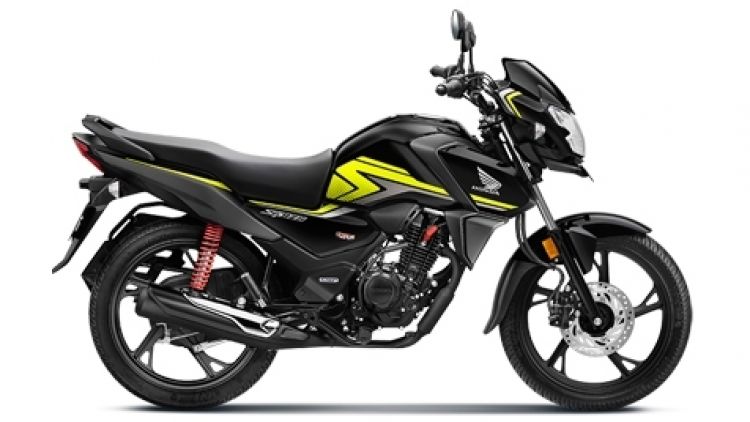
HONDA SP 125
 HONDA ACTIVA 125